Emergency dental treatment, please WhatsApp +852 6628 8780 Or contact our clinics





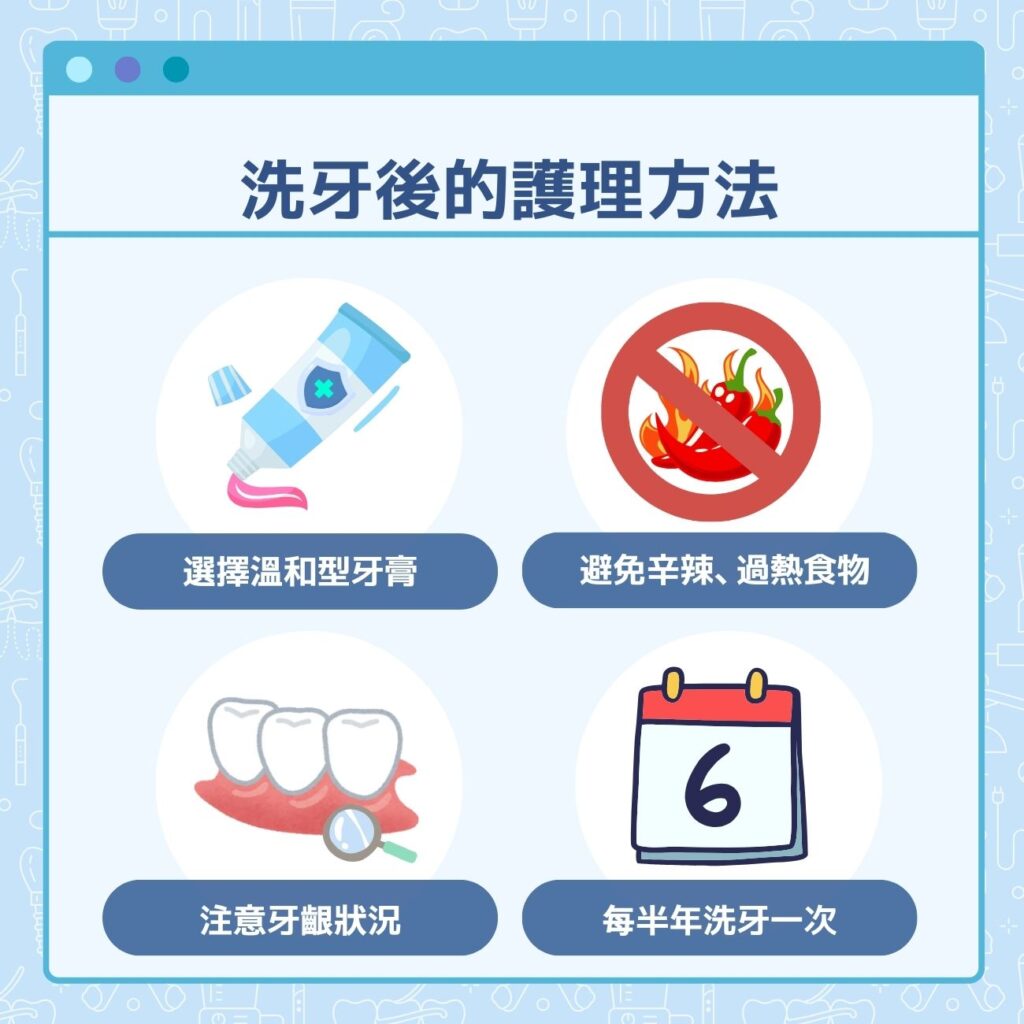
It is recommended to clean the teeth every six months for the general public, and every three months if you have periodontal disease, diabetes, or smoking habit, in order to maintain your oral health effectively.
Few cleanings? Ordinary People RecommendationsScaling Time
For those who are in good oral condition and do not have any special diseases, every six months is the ideal cleaning cycle.
Usually around 6 months.dental bacterial plaqueand tartar gradually builds up and is recommended to be removed by scaling.
If the interval is too long, the bacteria may cause damage to the periodontal tissues and form oral diseases.

These communities suggested thatHow often do you clean your teeth??
For the following special groups, dentists may recommend increasing the frequency of scaling to once every three months as they are more susceptible to oral conditions that require more frequent cleanings and check-ups:
- pregnant woman
- diabetes
- People with dry mouth
- Patients with high-risk diseases such as cerebrovascular disease, dialysis, malignant tumours, etc.
- Periodontist
- People undergoing orthodontic treatment
- People with smoking habit
How do you know when it's time to get your teeth cleaned?
Bleeding or swollen gums
If your gums bleed frequently, or even become red and sensitive when you brush or floss, this is most likely due to excessive plaque and calculus build-up, which causes gum inflammation, which can be alleviated by removing calculus through scaling.
Bad breath or visible tartar
If you have noticeable bad breath, or if you look in the mirror and see a build-up of hard, yellowish-brown lumps on the surface of your teeth and between the cracks, that's tartar, and the bacteria attached to tartar can cause bad breath.
If you want to solve bad breath and tartar, you can't get rid of them by brushing your teeth alone; both can only be treated by scaling before your breath really improves.
Haven't seen a dentist for more than 6 months
It is generally recommended to have your dentist check your mouth and clean your teeth every 6 months.
Even if you brush your teeth carefully, there will still be dead space that cannot be cleaned, and over time, it will become tartar.
Frequently Asked Questions
What are the benefits of regular dental cleaning?
Regular dental cleaning is like cleaning your mouth, removing tartar from the surface of your teeth and reducing the risk of bad breath, tooth decay, gum inflammation and periodontal disease. It also reduces the risk of cardiovascular disease and improves the whiteness and appearance of your teeth!
Do children need regular dental cleanings?
Of course you do! Children's mouths are more prone to harbouring food debris, which can increase the risk of tooth decay and gingivitis if left uncleaned for long periods of time.
Although children will change their teeth, the health of their milk teeth is very important because they will affect the alignment and bite of their permanent teeth. Therefore, it is recommended that parents bring their children for regular checkups and dental cleanings so that children can develop a proper concept of oral health care from an early age.
Will too much scaling hurt my teeth?
No. The principle of scaling is that ultrasonic vibration is used to break up the calculus. The principle of scaling is that ultrasonic vibration breaks up the calculus, and then rinses it away with a jet of water, without "thinning" or "scratching" the enamel.
On the contrary, if you do not clean your teeth for a long period of time, the build-up of calculus will cause periodontal disease, which is even more damaging to your teeth. It is very safe to have your teeth cleaned at the frequency recommended by your dentist.
What is the difference between scaling and deep cleaning?
General scaling removes tartar from the surface of the teeth and the gums, and is a healthcare procedure.
Deep scaling is a treatment for patients with periodontal disease, and is not the same as preventive scaling as it goes deeper into the root surface of the tooth to remove tartar and inflamed tissue.
Conclusion
Scaling can prevent periodontal disease, remove tartar and keep your breath fresh. It is recommended that you consult a professional dentist for more details about scaling.
Disclaimer:
The content of this article is for general health information only and does not constitute professional medical advice. Different conditions need to be assessed and treated by a dentist according to individual needs. For dental or oral related problems, please consult a qualified dentist for professional diagnosis and advice.