Emergency dental treatment, please WhatsApp +852 6628 8780 Or contact our clinics



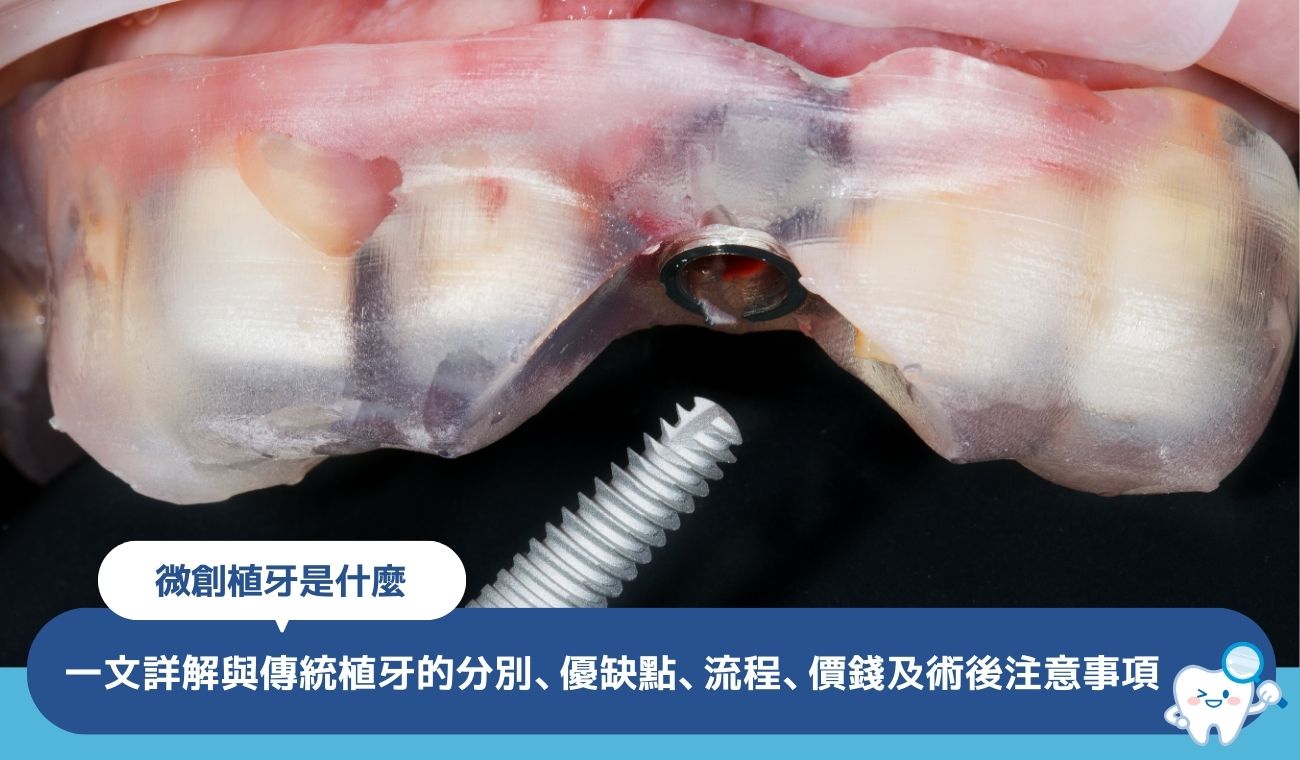
Minimally invasive dental implants use flapless surgery with 3D guides, characterized by small wounds, short operation time, low pain sensation, and quick recovery, suitable for those afraid of traditional flap surgery, but only applicable to those with sufficient bone quality.
Key Summary
- Principle of minimally invasive dental implants: using CBCT positioning, drilling small holes in the gums and implanting the implant.
- Advantages: no flap needed, short operation time, low postoperative pain sensation.
- Suitable candidates: those who wish to avoid flap surgery, patients with multiple missing teeth, and the elderly.
- Not suitable for those with severely insufficient bone volume or overly thin keratinized gums.
- The price for a single minimally invasive dental implant is approximately HK$18,000–$35,000.
What is minimally invasive dental implant?
Introduction to minimally invasive dental implants.
Minimally invasive dental implants differ from traditional implants that require cutting the gums and lifting them to expose the bone; it uses 3D computed tomography (CBCT) for precise positioning, drilling a small hole of about 3–4 millimeters in the gums to implant the artificial root.Alveolar boneIn this way, it reduces damage to soft tissues, lowers postoperative swelling and pain, and makes the recovery process more comfortable.
Advantages of minimally invasive dental implants.
The main benefits of minimally invasive dental implants lie in the efficiency during the procedure and the speed and comfort of recovery afterward:
- Short operation time: With computer navigation assistance, the operation time for a single implant is usually shorter than traditional methods.
- Lower pain sensation: With small wounds and limited surgical area, postoperative discomfort is usually lighter than traditional implants.
- Short recovery time: With small surgical wounds, swelling and bleeding are reduced, resulting in less impact on daily life.
- Reduce the risk of postoperative complications: Reduce flap and suturing, relative decrease in the risk of infection and gum recession.
Differences between traditional dental implants and minimally invasive dental implants
To clarify the differences between traditional dental implants and minimally invasive dental implants more quickly, the following 6 comparison items are listed for your reference:
| Item | Traditional dental implants | Minimally Invasive Dental Implant |
| Surgical incision | Larger, requires cutting and opening the gums | Small incision (only drilling), does not open the gums |
| Surgical time | About 60–90 minutes per tooth | About 30–60 minutes per tooth |
| Postoperative pain | Moderate, accompanied by swelling | Mild, usually only requires general painkillers |
| Suturing requirements | Requires suturing, stitches need to be removed postoperatively | Mostly no suturing required or only 1-2 stitches needed |
| Surgical field | Clear (the doctor can see the condition of the bone with the naked eye) | Limited (dependent on preoperative 3D imaging planning) |
| Technical threshold | Standard dental implant techniques | High (requires precise operation) |
Who is suitable for minimally invasive dental implants? 4 major applicable situations
Those with high aesthetic requirements for teeth
Minimally invasive dental implant surgery does not require opening the gums, which can maximize the preservation of the gum papilla (the triangular gum tissue between teeth), avoiding postoperative gum recession that causes black triangles (gaps between teeth), making it particularly suitable for aesthetic restoration of anterior teeth.
Those who wish to avoid bone grafting or flap surgery
For individuals who feel extremely anxious about "surgery," if the bone quality is suitable, minimally invasive dental implants can complete treatment while reducing invasiveness and surgical stress, thereby reducing psychological burden.
Those who need to restore multiple missing teeth simultaneously
For patients with full mouth or multiple missing teeth, if each tooth undergoes traditional flap surgery, the surgical time and wound area can be quite considerable. Minimally invasive techniques can shorten surgical time, reduce fatigue from prolonged mouth opening, and decrease postoperative swelling.
Elderly individuals concerned about surgical risks
For elderly patients with hypertension, diabetes, or cardiovascular diseases, surgery places a greater strain on the body.
Minimally invasive dental implants, due to less bleeding and shorter surgical time, can reduce the burden on the body, making it relatively safer for elderly individuals with more sensitive health conditions.
What are the disadvantages of minimally invasive dental implants? 4 important considerations to know
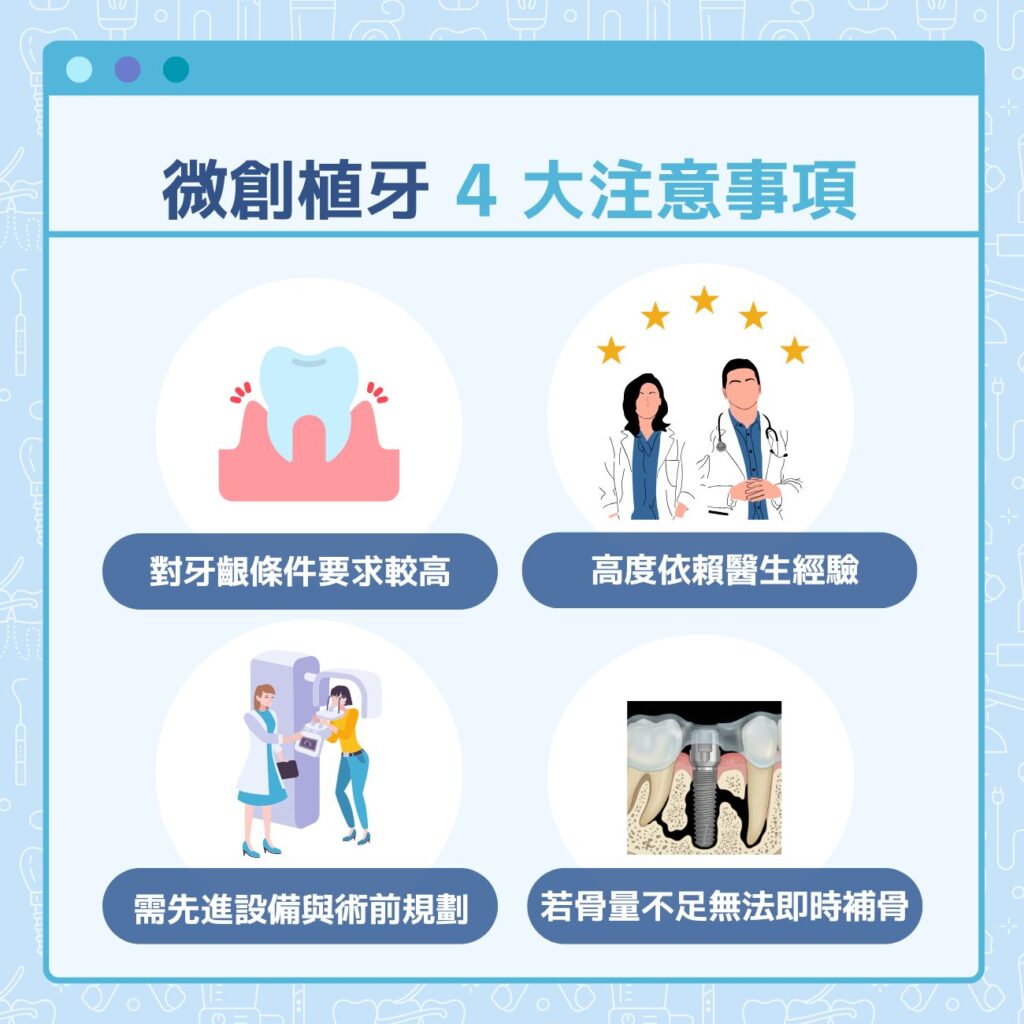
Higher requirements for gum and alveolar bone conditions
Sufficient "keratinized gingiva" (harder, pink gum tissue) is needed around the implant to resist bacteria and brushing friction. If the patient lacks this type of gum or has very thin gums, there may be a risk of gum recession or inflammation around the implant after surgery.
Highly dependent on the doctor's experience, implant positioning must be precise
Since the doctor "cannot see" the actual bone during the surgical process, it relies entirely on preoperative digital planning and tactile feedback. If the positioning is slightly off, it may accidentally injure nerves or the angle during implantation may not be ideal. Therefore, it is recommended that you prioritize choosing a medical team with rich experience in digital navigation dental implants during consultations to minimize risks.
Requires advanced equipment and preoperative planning, costs are usually higher
Minimally invasive dental implants combine advanced imaging scans and computer navigation technology to ensure the precision of the surgical site. Due to the additional digital planning time and the cost of creating customized surgical guides involved in this process, the overall cost is usually slightly higher than traditional implants. Although price is one consideration, for the accuracy and safety of the surgery, it is recommended to choose a dental clinic equipped with a complete 3D computed tomography scan and digital planning system, ensuring that every expense contributes to health protection.
Insufficient bone volume cannot be supplemented immediately, still carries surgical risks.
Performing minimally invasive dental implants requires the alveolar bone to have sufficient width and height to support the implant. If the bone volume is severely insufficient, bone graft surgery is usually required first (in most cases, a flap needs to be raised). Forcing minimally invasive dental implants in the case of insufficient bone may lead to implant exposure or surgical failure.
How long does minimally invasive dental implant surgery take? Understand the 7 steps of minimally invasive dental implants.
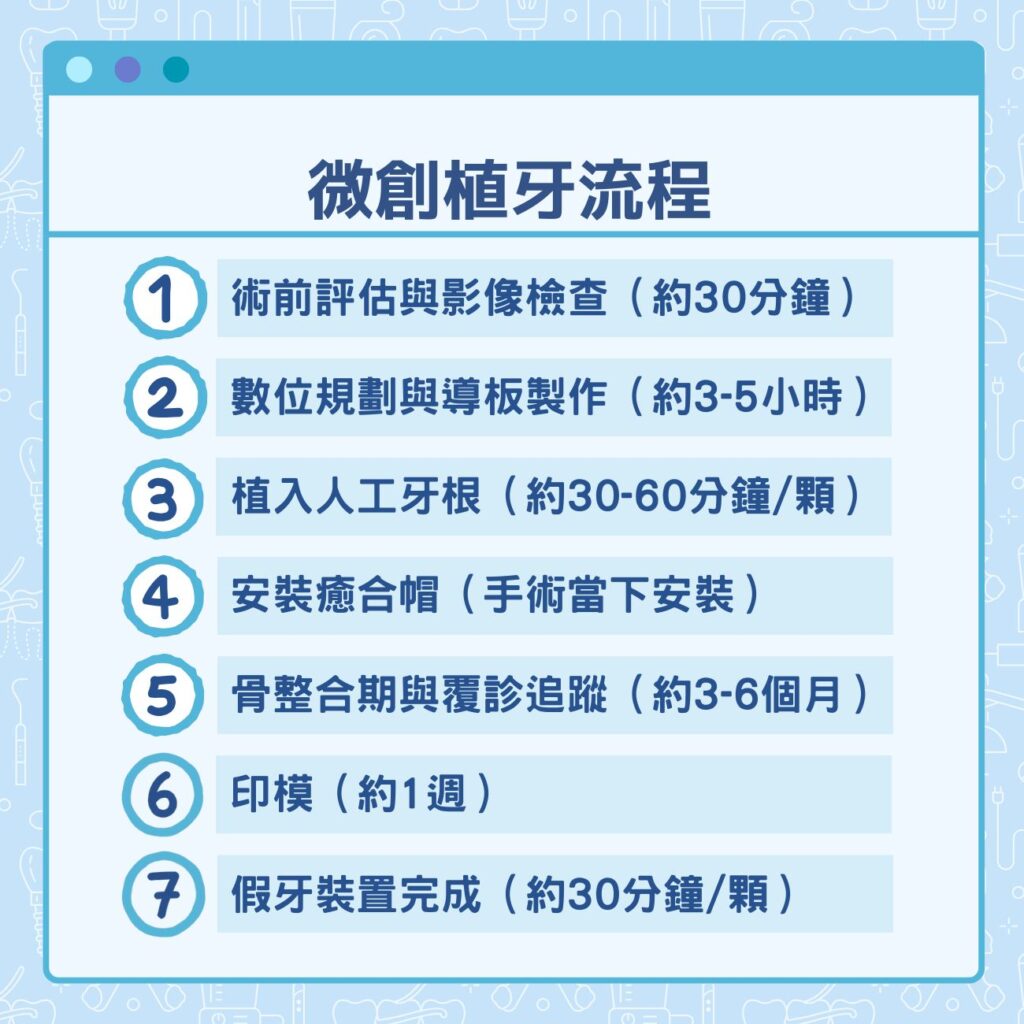
Minimally invasive dental implant time.
We have specially compiled this estimated timeline to help you easily grasp the entire progress of the minimally invasive dental implant treatment:
| Process steps. | Required Time (Estimated) |
| Preoperative assessment and imaging examination. | About 30–60 minutes. |
| Digital planning and surgical guide production. | About 3-5 hours. (Surgery can be performed on the same day). |
| Implant surgery. | About 30–60 minutes per tooth |
| Osseointegration period and follow-up. | About 3-6 months |
| Impression and denture production. | About 1 week. |
| Crown placement completion. | About 30 minutes per tooth. |
Minimally invasive dental implant process.
The process of minimally invasive dental implants is similar to traditional implants, with the biggest difference being the production of the guide. The overall process will be briefly explained below:
- Preoperative assessment and imaging examination (CT scan)
- Digital planning and surgical guide production.
- Implantation of artificial tooth roots (precisely implanted through a guide)
- Installation of healing cap (usually no sutures required)
- Wound healing period (waiting for bone integration)
- Impression making
- Crown placement completion.
What is the cost of minimally invasive dental implant surgery in Hong Kong in 2026?
The following provides reference prices for the Hong Kong market in 2026 (per tooth),However, the actual cost of dental implants will still vary depending on the implant brand, whether bone grafting is needed, and the production of the guide.:
| Item | Cost range (HKD) | Remarks |
| Minimally invasive dental implants (including surgical fees and implants) | HK$18,000 – HK$35,000 | Depending on European, American, or Korean brands |
| Surgical guide production fee | HK$2,000 – HK$5,000 | Necessary expenditure to enhance precision |
| All-ceramic crown | HK$6,000 – HK$10,000 | Depending on material and aesthetic requirements |
| Total budget reference | HK$26,000 – HK$50,000+ | The actual quotation is subject to the clinic's assessment. |
Frequently Asked Questions
Can I exercise after minimally invasive dental implants?
It is recommended to avoid vigorous exercise (such as weight training, running, swimming) within 2-3 days post-surgery to prevent accelerated blood circulation that may cause bleeding or bruising at the wound site. Light activities like walking are generally fine.
Can I eat immediately after minimally invasive dental implant surgery?
You can eat once the anesthesia has completely worn off (about 2-3 hours) and it is confirmed that there is no risk of biting your lips. It is recommended to choose liquid or soft foods (such as porridge, tofu) for the first two days and to avoid overly hot or spicy foods.
Is the success rate of minimally invasive dental implants higher than that of traditional implants?
The success rate is related to the doctor's experience and the patient's bone quality; generally, the success rates of minimally invasive dental surgery and traditional implants are quite similar.
Does the surgical process require general anesthesia?
Most minimally invasive dental implants can be performed with local anesthesia; you will remain awake during the procedure but will not feel pain.
Do minimally invasive dental implants require stitches?
Most minimally invasive surgeries do not require sutures, so there is no need for stitch removal. If sutures are necessary due to wound considerations, typically 1-2 stitches will be removed by the dentist during a follow-up visit 7-10 days post-surgery, and the process is usually quick and painless.
What are the key points for post-operative care and maintenance after minimally invasive dental implants?
Avoid vigorous rinsing within 24 hours post-surgery to prevent dislodging blood clots and causing bleeding. It is recommended to use a soft-bristled toothbrush while brushing and to avoid the surgical area. Oral hygiene in the surgical area can be maintained using the mouthwash prescribed by the doctor (alcohol-free) for gentle rinsing.
Conclusion
Minimally invasive dental implants provide a more comfortable post-operative experience with small incisions, making them particularly suitable for patients who have aesthetic requirements for their teeth, wish to minimize surgical trauma, or need to restore multiple missing teeth. If you are considering minimally invasive dental implants, it is advisable to schedule a consultation with a trusted dental clinic to understand your gum and bone conditions and discuss the feasibility and process of the surgery with the dentist, choosing the treatment plan that best suits you.
Extended reading: 《Complete Guide to Dental Implants: Understand the implant process, principles, advantages and disadvantages, prices in Hong Kong, and precautions in one article》
Disclaimer
This article is for informational purposes only and does not contain any invitation or solicitation. Patients should seek professional diagnosis and treatment for their conditions. For further information or to make an appointment, it is advisable to contact the relevant clinic directly. Please take care in choosing the right dental service and clinic.