Emergency dental treatment, please WhatsApp +852 6628 8780 Or contact our clinics




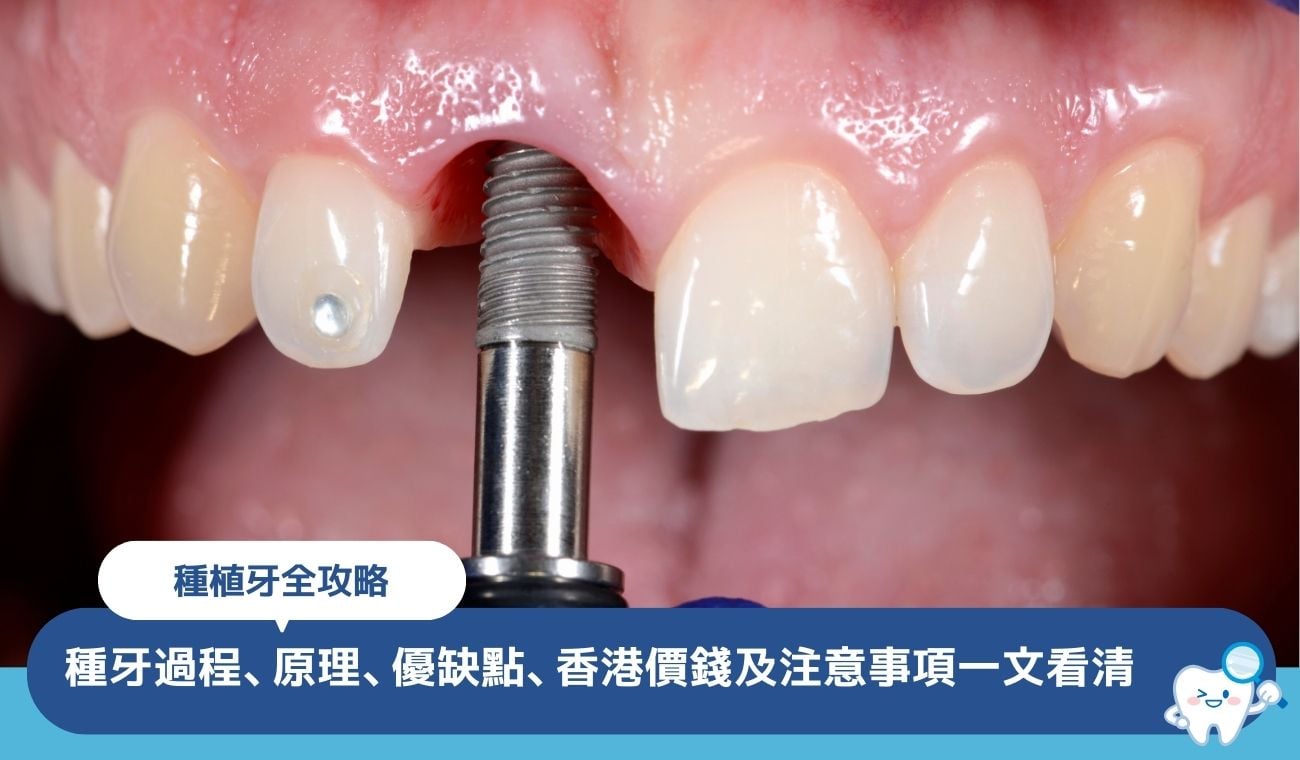
Dental implants are a method of tooth restoration that involves implanting artificial tooth roots, which, after integrating with the bone, are fitted with dental crowns to restore chewing function. They function similarly to natural teeth and have advantages such as stability, not harming neighboring teeth, and preventing bone loss.
Key Summary
- Utilizing titanium alloy artificial tooth roots implanted into the alveolar bone to simulate the function of natural tooth roots.
- Composed of an implant, abutment, and crown.
- Suitable for patients with healthy periodontal conditions, sufficient bone quality, and stable physical health.
- Main methods include traditional implants, minimally invasive implants, and immediate loading implants.
- The treatment duration is approximately 3-12 months (depending on whether bone grafting is needed).
What is a dental implant?
A dental implant, also known as an artificial tooth implant, is currently the closest method to natural teeth for tooth restoration.
Principle of dental implants.
The principle of dental implants is to use "titanium alloy," which has a high biocompatibility with the human body, to create artificial tooth roots, and to directly implant the fixture into the alveolar bone, forming a stable support point.
The implant and bone gradually fuse (osseointegration), simulating the function of natural tooth roots, allowing the dentures to be securely fixed and the chewing force to be close to that of natural teeth.
Components of dental implants.
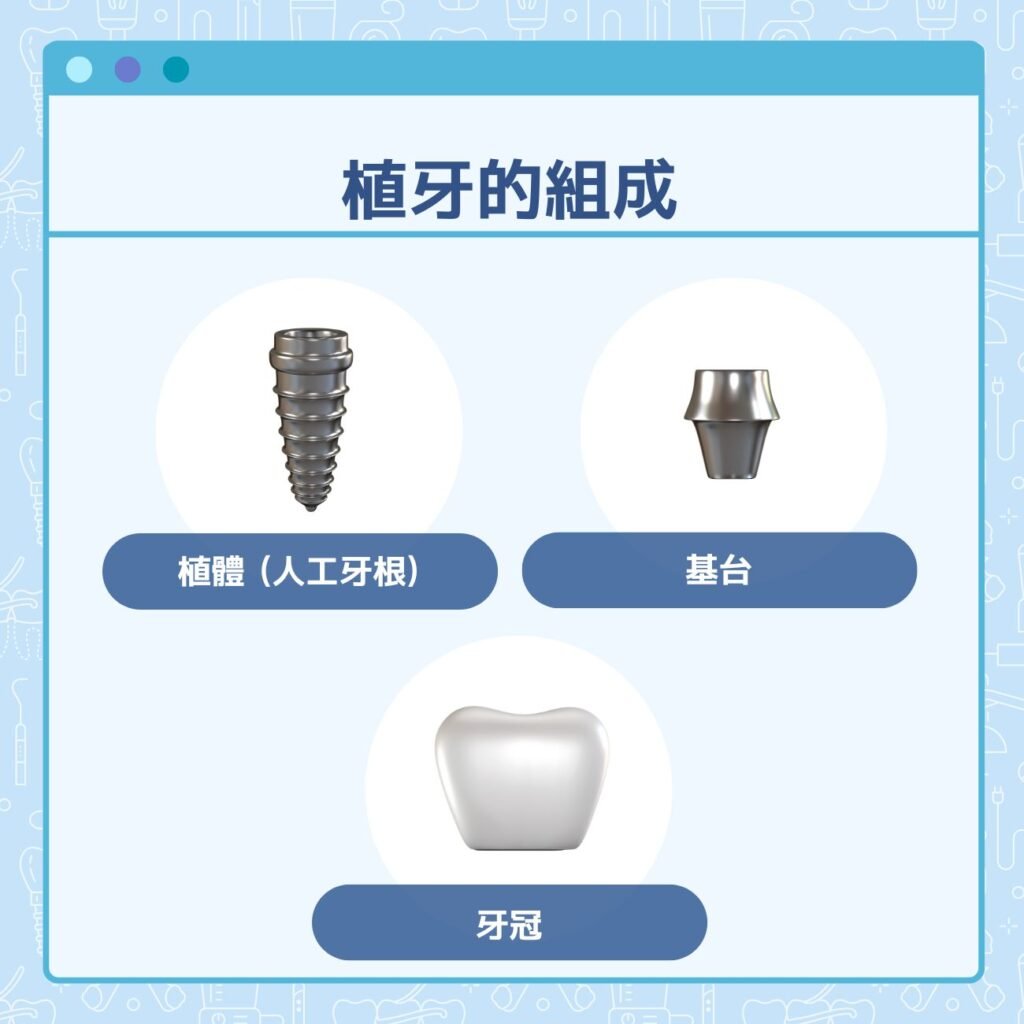
A standard dental implant mainly consists of three parts:
- Fixture.This is the artificial tooth root, implanted into the bone, acting as the root of a large tree.
- Abutment.This is the intermediary part that connects the fixture and the crown, supporting the upper part like a tree trunk.
- Crown.This is the part of the denture that is exposed outside the oral cavity, responsible for chewing and aesthetics, akin to the crown of a tree.
Advantages of dental implants.
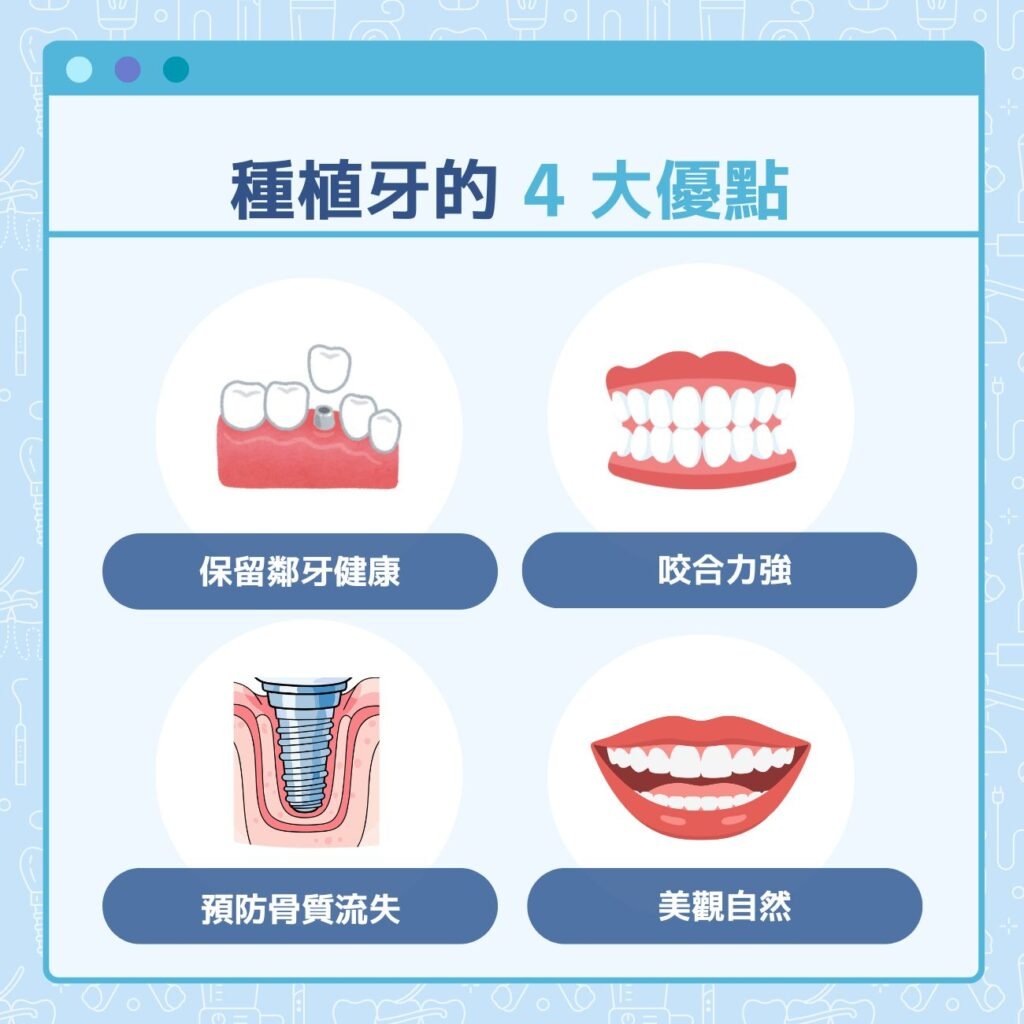
Compared to other restoration methods, dental implants have the following 4 unique advantages:
- Preserve the health of adjacent teeth: There is no need to grind down healthy adjacent teeth like with a "bridge."
- Strong biting force: Can restore chewing power close to that of natural teeth, above 90%.
- Prevent bone loss: The artificial root can continuously stimulate the alveolar bone, slowing down the rate of bone atrophy and maintaining a full facial shape.
- Aesthetically natural: Appearance is indistinguishable from natural teeth, with color and shape customizable.
Comparison of tooth restoration options: Implants vs Dentures vs Bridges
Of course, there are other methods for tooth restoration. To help you clarify the characteristics of different restoration methods, we have organized the following table:
| Item | Dental Implants (Implant) | Bridges (Bridge) | Removable Dentures (Denture) |
| Principle | Implanting an artificial root, independently supported | Using adjacent teeth on both sides as bridge supports | Adhering to the gum or hooking onto natural teeth |
| Is there wear on adjacent teeth? | No (completely independent) | Yes (requires grinding down healthy teeth on both sides) | No (but the metal hook may scratch the teeth) |
| Bite force | Similar to natural teeth | Acceptable | Weaker |
| Bone loss | Can slow down loss | Cannot prevent | Cannot prevent |
| Lifespan | 10-20 years or more | About 7-10 years | About 3-5 years need replacement or padding |
Can everyone get dental implants? First assess these 3 major conditions
Periodontal health: severe periodontitis needs to be treated first
Dental implants require a healthy gum environment. If suffering from severeperiodontitis, the amount of bacteria in the mouth is higher, which may increase the risk of peri-implantitis, leading to implant loosening.
Therefore, dentists usually recommend completing periodontal treatment before dental implants to ensure the oral conditions are suitable for implants.
Bone condition: density and strength of the alveolar bone
Implants require sufficient bone coverage to stand stable. If the tooth loss lasts too long, the alveolar bone may have severely atrophied.
In this case, the doctor may recommend performing a "bone grafting" surgery first to rebuild the height and width of the foundation, ensuring the implant can be securely placed.
Physical condition: Diabetes / Osteoporosis / Other chronic diseases
Chronic diseases may affect wound healing, so the doctor will also assess your physical condition before the implant:
- diabetes: Need to controlGlycated hemoglobin(HbA1c) below 7.1% to avoid affecting wound healing.
- Osteoporosis: If you are taking bisphosphonate medications, a doctor needs to evaluate whether to stop the medication to avoid the risk of bone necrosis.
- Cardiovascular disease: If you are taking anticoagulant medications, a doctor needs to assess the duration of stopping the medication to avoid difficulties in blood clotting during surgery.
- Smoking habits: The nicotine and tar in cigarettes may interfere with bone integration and increase the risk of wound infection, reducing the overall success rate of implants.
What are the methods of dental implants? A comparison of traditional implants and minimally invasive implants.
Traditional dental implants
Traditional implant surgery involves opening the gums to fully expose the alveolar bone, allowing the doctor to clearly observe the actual condition in the mouth before accurately placing the implant.
The advantage is that the surgical field is clear, and even if the patient's bone quality is complex or requires bone grafting, it can effectively enhance the safety and success rate of the implant.
Minimally Invasive Dental Implant
Minimally invasive implants use surgical guides and 3D computed tomography to plan the implantation position, requiring only a small hole to be drilled in the gums to place the implant, without the need for extensive flap elevation.
Due to the small wound, less bleeding, and swelling, in most cases, sutures or removal of stitches are not required, making it particularly suitable for patients with sufficient bone volume and good periodontal health. The advantage is that it maintains the success rate while reducing discomfort and speeding up recovery.
Immediate Extraction and Implantation
Directly placing the implant into the existing tooth socket at the time of extraction helps maintain the shape of the gums and shortens the overall treatment time.
This method has higher requirements for the stability of the alveolar bone and periodontal health and needs to be professionally evaluated by a dentist. The advantage is that it reduces the number of surgeries, speeds up recovery, and simultaneously considers aesthetic effects and the reconstruction of chewing function.
Comparison of 3 common dental implant methods
To more intuitively distinguish the characteristics of the three, we have organized a table for your reference:
| Item | Traditional dental implants | Minimally Invasive Dental Implant | Immediate Extraction and Implantation |
| Surgical wound | Larger (requires flap) | Very small (no flap needed) | Depends on the extraction wound |
| Post-operative swelling and pain | Mild to moderate | Mild | Mild to moderate |
| Suitable candidates | Those with complex bone structure requiring bone grafting | Those with good bone quality | Those with intact alveolar bone walls |
| Treatment time | 長 | 短 | 中 |
How to choose the suitable dental implant method?
There is no absolute best method for dental implants. Even though minimally invasive implants are more comfortable, if there is insufficient bone, traditional methods for bone grafting are still needed.
The actual choice should consider bone quality, periodontal health, and lifestyle needs, and a suitable treatment plan should be formulated after evaluation by the dentist.
7 major steps in the dental implant process
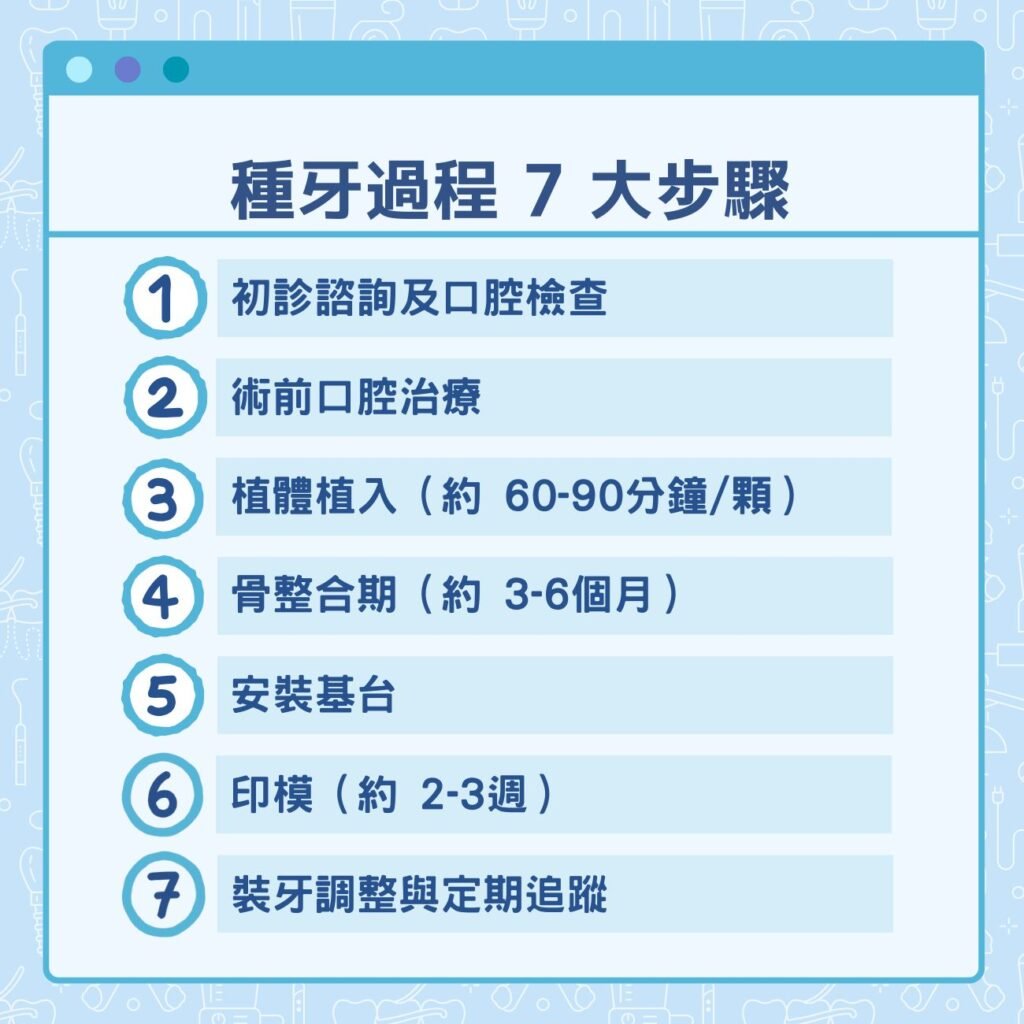
Dental implanting is a lengthy process. To ensure quality, the treatment interval is about 3-12 months (depending on whether bone grafting is needed and the speed of bone integration):
- Initial consultation and oral examination: Take X-rays or CT. Evaluate bone quality and nerve position, and develop a treatment plan.
- Preoperative oral treatment: Address cavities, periodontal disease, or perform bone graft surgery (treatment duration may be extended if necessary).
- Implant placement: Complete implant fixation through traditional or minimally invasive surgery.
- Osseointegration period: Wait for the implant to integrate with the bone (approximately 3-6 months).
- Abutment installation: Connect the supporting structure for the crown, allowing the gums to form.
- Impression: Create a customized crown based on tooth color and occlusion.
- Denture adjustment and regular follow-up: Complete crown installation, adjust occlusion for comfort, and return regularly for check-ups and maintenance.
The above steps are a brief introduction; for more detailed information, it is recommended to refer to the following articles.
Extended reading: 《Complete analysis of the dental implant process | 7 major steps from consultation, surgery to completion and implant timeline》
Overview of dental implant prices in Hong Kong
Latest dental implant prices for 2026
Below are the price ranges for 3 different dental implant methods for reference,However, the actual charges depend on individual clinics, doctors' assessments, and patients' oral conditions.:
| Dental Implant Methods | Average cost range (HKD) |
| Traditional Dental Implant | HK$16,000-$25,000 / piece |
| Minimally Invasive Dental Implant | HK$18,000–$35,000 / piece |
| Immediate Extraction and Implantation | HK$16,000-$25,000 / piece |
Other potential costs related to dental implants
To avoid budget overruns, it is recommended to pay attention to the following possible additional charges:
- Bone grafting powder/membrane: If there is insufficient bone volume, bone grafting surgery is required to stabilize the foundation first.
- Sinus lift surgery: If the bone in the upper molar area is too thin and close to the sinus, it is necessary to reinforce the thickness of the bone first.
- Temporary dentures: If the missing teeth are in the front, a temporary denture may be needed during the transition period.
How long can dental implants last? Key points for post-surgery care
Many people think that once they get implants, they are set for life, but dental implants, like natural teeth, require careful maintenance to last long.
Average lifespan of dental implants
According to clinical data, with proper care, most dental implants can last 15-20 years, and it is quite common for them to last a lifetime.
Cleaning and care after getting dentures
Although dental implants do not decay, the surrounding gums may still become inflamed due to bacterial accumulation.
By brushing correctly every day and using dental floss or a water flosser to clean around the implant, oral hygiene can be effectively maintained, reducing the risk of peri-implantitis and extending the lifespan of the implant.
Regular follow-up check-ups
It is recommended to have a follow-up examination every six months to a year to check the stability of the implant and the occlusion status.
Frequently Asked Questions
Is dental implant suitable for the elderly? Is there an age limit?
Age is not a limitation for dental implants; as long as the physical condition permits (such as controlled blood pressure and blood sugar), the elderly can also undergo dental implants.
How long does the dental implant surgery take?
A single implant surgery generally takes about 30-60 minutes, while multiple implants may take longer depending on the scope and complexity of the surgery.
Will the dental implant procedure be painful? Is hospitalization required?
Dental implants are outpatient surgeries,and hospitalization is not required.Local anesthesia will be injected during the surgery, and there will be no significant pain during the process. After the anesthesia wears off, there may be a feeling of swelling, but taking the painkillers prescribed by the doctor can effectively relieve it.
Is there a risk with dental implants? Is the failure rate high?
Any surgery carries risks, but dental implants are considered a mature and highly successful technique in modern dentistry. Common clinical failure cases mostly stem from insufficient oral hygiene post-surgery leading to inflammation, or smoking habits affecting wound healing and bone integration.
Can I eat immediately after getting dental implants?
You can eat after the anesthesia wears off (about 2-3 hours). In the first few days after surgery, it is recommended to eat warm, soft foods (such as porridge, tofu, steamed eggs) and avoid spicy or other irritating foods.
Conclusion
Dental implants not only restore missing teeth but also serve as a long-term investment in rebuilding chewing ability and confidence. Although the treatment takes longer, the stability and comfort far exceed traditional dentures. Regardless of the technique chosen, the key to success always lies in "accurate preoperative assessment" and "consistent postoperative care." If you are still hesitating about starting the treatment, consider consulting a trusted dental clinic for more information!
Disclaimer
This article is for informational purposes only and does not contain any invitation or solicitation. Patients should seek professional diagnosis and treatment for their conditions. For further information or to make an appointment, it is advisable to contact the relevant clinic directly. Please take care in choosing the right dental service and clinic.