Emergency dental treatment, please WhatsApp +852 6628 8780 Or contact our clinics




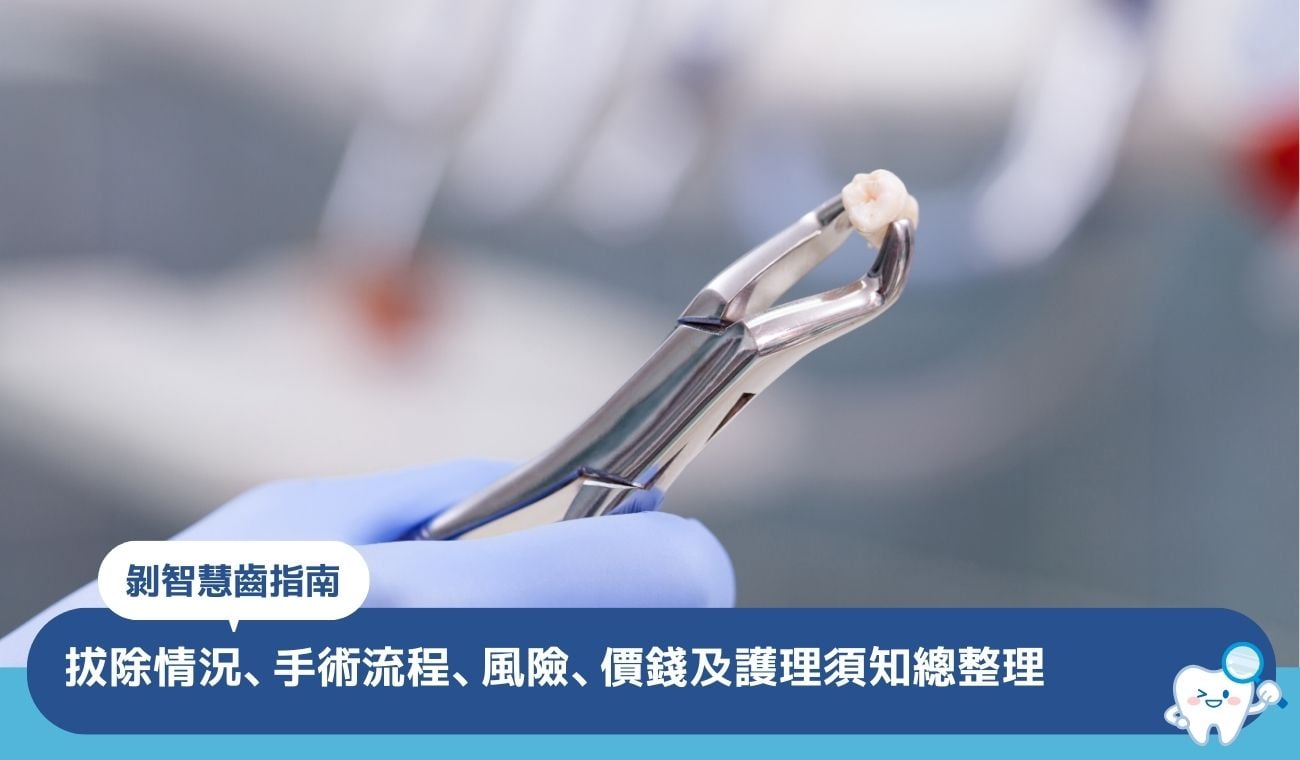
Wisdom tooth extraction is usually performed when the wisdom tooth is misaligned, impacted, inflamed, or pressing against neighboring teeth, aiming to resolve issues like cavities, infections, and pain. Post-surgery, attention must be paid to diet and hygiene.
Key Summary
- Situations Requiring Extraction: Recurrent inflammation, cavities affecting neighboring teeth, impaction leading to cysts
- Surgical Process: Pre-operative assessment, anesthesia, tooth extraction, and wound management
- Dietary Restrictions: For the first few days post-surgery, only consume room temperature liquids, and using straws is strictly prohibited
- Recovery Time: Swelling peaks 2–3 days post-surgery, with swelling subsiding in about 7–10 days
What situations require wisdom tooth extraction? Be aware of these oral issues
Not every wisdom tooth needs to be removed; if it grows in a proper position, can be thoroughly cleaned, and has an opposing tooth, then extraction is unnecessary. However, if any of the following 5 situations occur, we usually recommend addressing them as soon as possible to avoid future complications.
Inflammation of the wisdom tooth gum
When the wisdom tooth has not fully erupted (partially impacted), a "blind pocket" forms between the crown and gum, making it easy for food debris to accumulate and difficult to clean. When bacteria proliferate, it can lead to pericoronitis, causing gum swelling, bleeding, and even pus formation.
Recurrent wisdom tooth pain
If the wisdom tooth frequently causes pain, especially at night or while chewing, it indicates that the tooth's position may be obstructed. This type of recurrent pain is classified as chronic inflammation, and over time, the infection may spread, potentially affecting the health of surrounding tissues.
Cavities or impact on neighboring teeth
Impacted wisdom teeth often tilt forward, pressing against the second molar in front. The gap between these two teeth easily traps food, and over time, not only can the wisdom tooth decay, but the healthy tooth in front can also be affected.
Horizontally impacted wisdom teeth leading to cysts or lesions
When a horizontally impacted wisdom tooth remains buried in the jawbone for an extended period, the soft tissue surrounding the tooth may undergo pathological changes, slowly forming a fluid-filled "cyst" (commonly known as a dental cyst). This cyst can expand like a balloon within the bone, gradually eroding the jawbone and even pressing against the roots and nerves of adjacent teeth.
Extended reading: 《What to do if wisdom teeth grow horizontally near the nerve? A comprehensive look at the symptoms of nerve damage from wisdom teeth and how to handle it.》
Pre-orthodontic or preventive extraction
Before undergoing orthodontic treatment (braces), to create space for teeth movement or to prevent wisdom teeth from disrupting the alignment of teeth after braces are removed, doctors usually recommend extraction first.
The 4 Major Steps of Wisdom Tooth Surgery
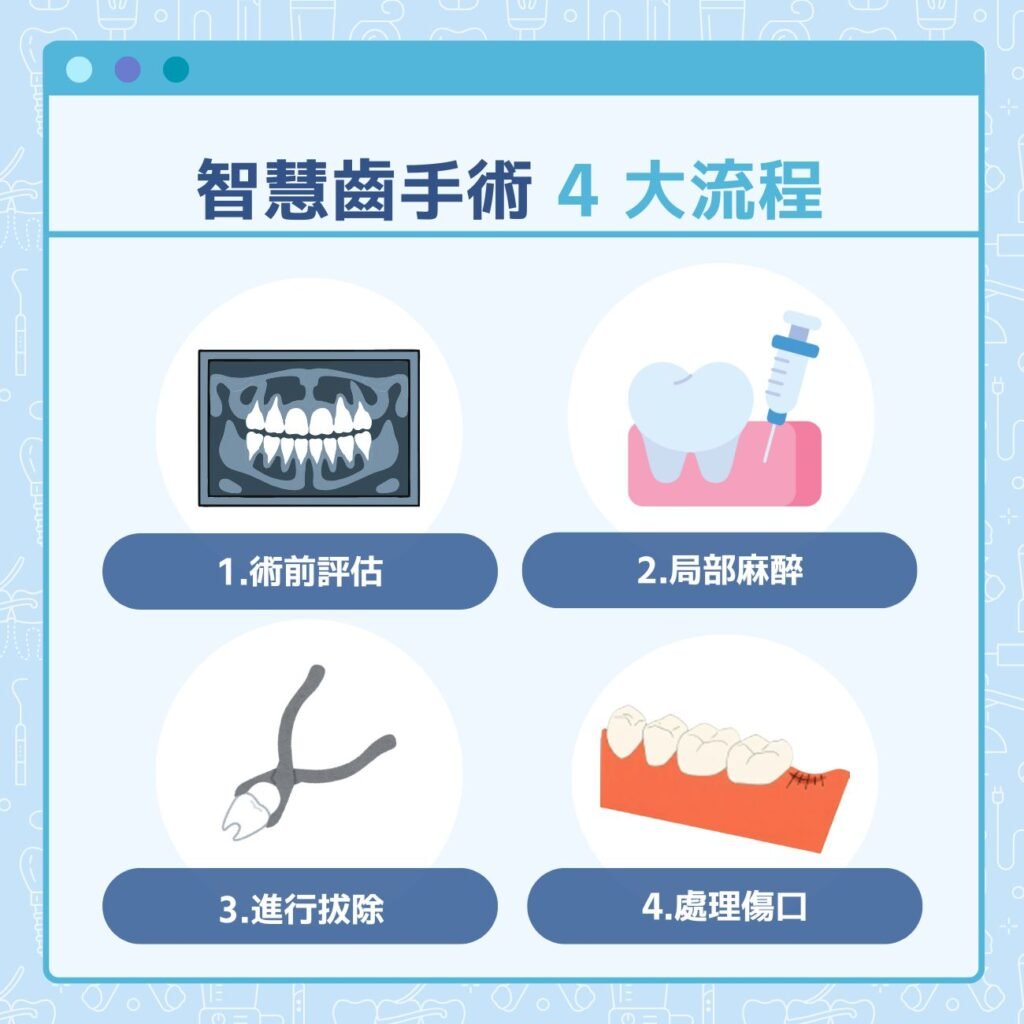
Wisdom tooth extraction surgery typically involves the following 4 steps:
- Preoperative assessment: The doctor will first conduct a clinical examination and take X-rays to confirm the extraction method.
- Local anesthesia: Local anesthesia or sedation, if necessary, is used to reduce discomfort during the procedure.
- Tooth extraction: Depending on the degree of impaction of the wisdom tooth, it may be necessary to cut the gum or remove it in sections.
- Wound management: After the tooth is completely removed, the dentist will suture if necessary and have you bite down on gauze to stop the bleeding.
Post-operative care and dietary precautions after wisdom tooth extraction
The golden 24 hours for bleeding control and swelling reduction
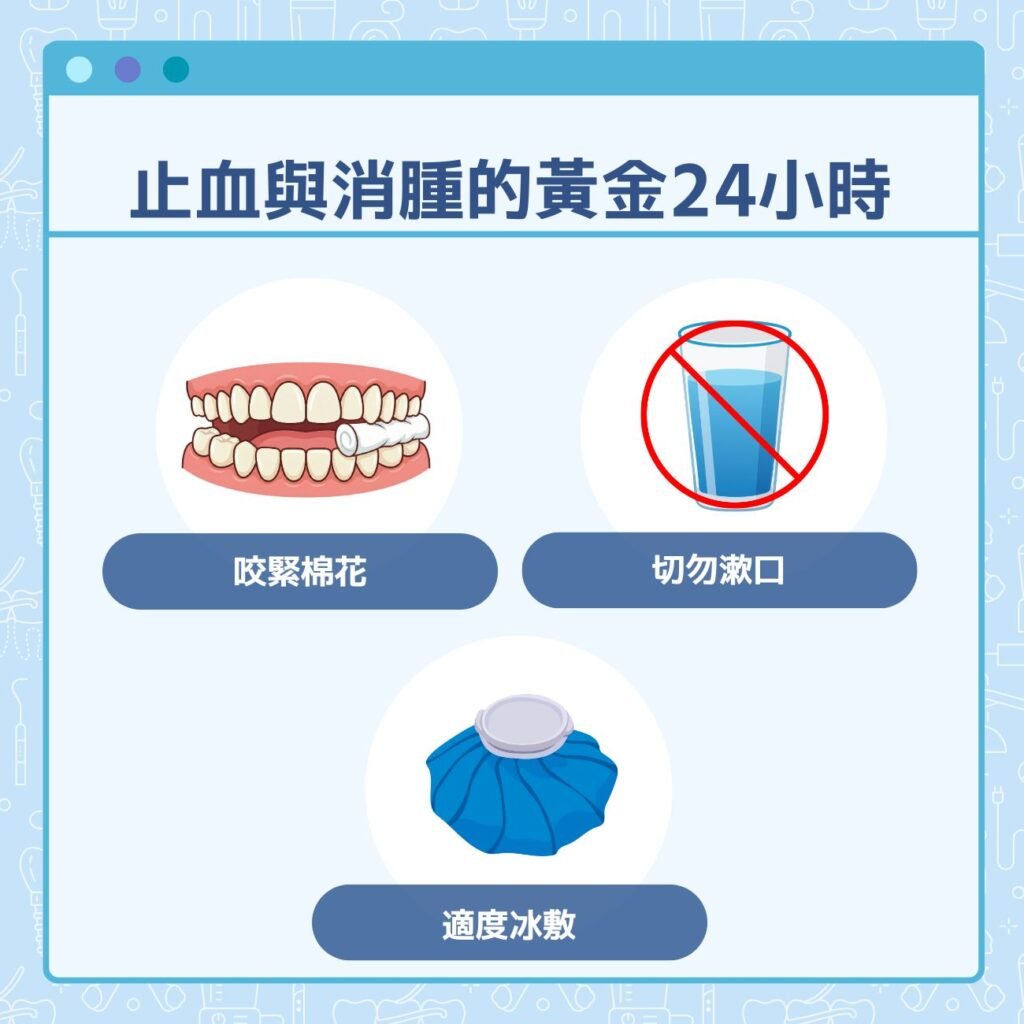
Post-operative care is equally important for wound healing; please adhere to the following guidelines within 24 hours after surgery:
- Bite down on gauze: After the procedure, please bite down on gauze for about 60 minutes to help the wound clot.
- Do not rinse: On the day of surgery, please do not rinse vigorously or spit frequently to avoid dislodging the blood clot that protects the wound.
- Moderate ice application: Within 24 hours post-surgery, apply an ice pack wrapped in a towel to the outside of your cheek for 15 minutes, then rest for 15 minutes, which helps reduce swelling and pain.
Dietary restrictions during the recovery period: Avoid hot foods, hard items, and using straws

In the first few days after wisdom tooth extraction, it is recommended to consume room temperature or slightly cool liquids and soft foods (such as congee, yogurt, tofu, or ice cream).
Additionally, during the initial healing phase, do not use straws at all. The sucking action can create negative pressure in the mouth, easily dislodging the protective blood clot and leading to "dry socket." Also, avoid consuming very hot, spicy, or hard foods to prevent irritating the wound.
Is there a risk with wisdom tooth extraction surgery?
Although wisdom tooth extraction is a routine dental procedure, there are still certain surgical risks, mainly depending on the position of the tooth and post-operative care.
The most common concern is "nerve damage," especially if the roots of the lower wisdom tooth are extremely close.Inferior alveolar nerveThe surgical process may cause temporary numbness in the lips or chin, but this condition usually self-resolves within a few weeks to months.
Additionally, if the wound is not properly cleaned after surgery, food debris falling into the tooth socket may also lead to bacterial infection and inflammation.
Hong Kong Wisdom Tooth Extraction Price Market
Basic fee differences: Simple extraction vs Surgical operation
- Simple extraction: For wisdom teeth that have fully erupted and do not require cutting the gum, the market price is about HK$2,500-$4,500 per tooth.
- Surgical operation: For impacted teeth buried in the bone that require opening the gum, grinding the tooth, and stitching, the market price is about HK$4,500-$10,000+ per tooth.
The above are all market reference prices; actual costs still depend on the doctor's assessment.
Other variables affecting price
In addition to the difficulty of the tooth itself, whether to choose a specialist (Oral and maxillofacial surgery), whether sedation anesthesia is needed (suitable for extremely anxious patients), and whether the clinic is equipped with advanced digital scanning equipment will all affect the final quotation.
Frequently Asked Questions
How many wisdom teeth can be extracted at once?
It is generally recommended to extract one side at a time (two teeth in total, one on top and one on the bottom), so you can retain the other side for chewing food.
Is it normal to have a fever after wisdom tooth extraction?
The body may produce an immune response after surgery, which can result in a slight low fever (below 38°C), and this is considered normal. However, if a high fever persists or is accompanied by severe swelling and pain, please return for a check-up immediately.
Which type of wisdom tooth is the hardest to extract?
Generally, horizontally impacted lower wisdom teeth with hooked roots are the most complex to handle, and the surgical time will also be longer.
Will wisdom tooth extraction be very painful?
Under local anesthesia, the surgical process will not be painful. After the anesthesia wears off, there may be a feeling of swelling and pain (for about 2-3 days), but as long as you take the prescribed painkillers on time, the pain is usually within a tolerable range.
How long will the swelling last after wisdom tooth extraction?
Usually, the swelling is most noticeable on the 2nd to 3rd day after surgery, and then it will gradually subside, returning to normal in about 7-10 days.
Will wisdom tooth extraction affect my facial shape or chewing function?
Wisdom tooth extraction does not change the size of the mandible, so there will be no "slim face" effect. As for chewing function, since wisdom teeth have little functional value, their removal will hardly affect eating ability.
How long does it take for the wound to heal after wisdom tooth extraction?
The soft tissue of the gum surface will heal in about 1-2 weeks, while the underlying bone will take about 3-6 months to completely fill the tooth socket.
Conclusion
Nowadays, wisdom tooth extraction is a quite mature and safe routine treatment. Through professional X-ray examination and assessment, doctors can accurately grasp the position of the nerve lines, significantly reducing surgical risks. As long as you actively cooperate with post-operative care, the recovery process will almost always go smoothly. Instead of delaying treatment due to worries, it is better to consult a dentist early to formulate the most suitable plan and thoroughly resolve oral hidden dangers.
Disclaimer
This article is for informational purposes only and does not contain any invitation or solicitation. Patients should seek professional diagnosis and treatment for their conditions. For further information or to make an appointment, it is advisable to contact the relevant clinic directly. Please take care in choosing the right dental service and clinic.